.png)

.png)

541512
541611
541330
313320
541715
Administrative Management, Research and Development in the Physical, Engineering, and Life Sciences
Project Portfolio
Landstronaut’s key projects are designed as deployable, scalable systems that integrate artificial intelligence, human performance, and infrastructure across terrestrial, atmospheric, and space environments.
Each initiative is built on three core principles:
-
AI-first capability development
-
Modular Open System Architectures (MOSA)
-
Rapid deployment at commercial velocity
Landstronaut leads next-generation operational ecosystem aligned with defense modernization, commercial AI acceleration, and global infrastructure expansion.
Readiness
01
DEPLOYMENT READINESS
These initiatives are structured for immediate activation upon initial investment in legal and critical infrastructure, establishing:
-
Secure data environments
-
Operational AI systems
-
Contract-ready deployment capability
02
POSITIONING
Landstronaut operates at the intersection of:
-
Artificial Intelligence
-
Human Performance Systems
-
Infrastructure and Compute
-
Multi-Domain Operations
Risk and Urgency
The absence of a unified structural framework for global infrastructure systems and humans introduces increasing systemic risk across critical domains of global stability.
As infrastructure systems become more interdependent and exposed to environmental volatility, the lack of integrated design logic between environment, workforce, capital, and validation systems increases the likelihood of:
-
infrastructure underperformance under real operational stress conditions
-
misalignment between human capability and system complexity
-
inefficient capital deployment into non-validated systems
-
delayed readiness in critical infrastructure and defense environments
-
fragmentation of resilience standards across global jurisdictions
Context
Landstronaut is structured for alignment with institutional actors operating at global scale, including:
-
National and regional governments
-
Defense and security institutions
-
Sovereign infrastructure and investment entities
-
Multilateral development organizations
-
Large-scale infrastructure and systems integrators
-
Research and applied development institutions
Global Importance
The absence of a unified structural framework for global infrastructure systems and humans introduces increasing systemic risk across critical domains of global stability.
Its global importance is rooted in its role as an architectural framework that enables:
-
coherence between infrastructure design and operational reality
-
alignment between human capability systems and environmental complexity
-
synchronization of capital deployment with validated readiness conditions
-
structured integration across terrestrial, climate-adaptive, and space-adjacent systems
System-Level Response
Landstronaut exists to define a unified architectural response to this gap by reframing how global infrastructure systems and humans are structured across Land-to-Space systems, while incorporating the structured role of Landstronauts as human-system interface operators who function within, interpret, and stabilize complex operational environments under validated conditions of infrastructure, environmental stress, and system complexity.
S o l u t i o n s
01
Landstronaut deliver future-based environmental living solutions that meet resilient infrastructure standards while fulfilling the lifestyle and operational needs of our clients. From developmental to mission-critical habitats.
Landstronaut operates under FRASCI™, a proprietary convergence doctrine (Future-based, Resilient, Accountable, Sustainable, Customizable, and Integrated Infrastructure) that guides how Human-Centered resilience and Infrastructure resilience converge.
Sample
01
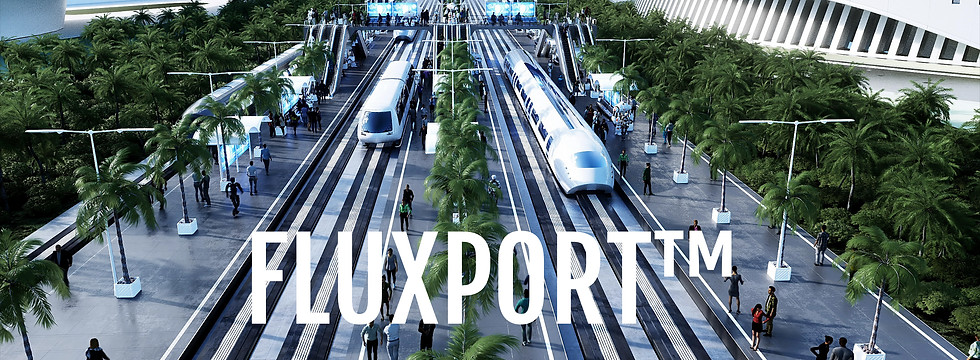
Landstronaut FluxPort™
Landstronaut Fluxport™ is designed as a practical, deployable infrastructure intelligence system, not a conceptual model. It provides Miami-Dade County with a phased pathway to modernize logistics, reduce systemic inefficiencies, and position itself at the intersection of global trade, AI governance, and aerospace-enabled economic expansion.
Human–System Architecture Layer
Landstronaut defines structured human-system interaction across five foundational domains:
-
Lifestyle Systems — human operational conditions within built environments and environmental constraints
-
Infrastructure Systems — physical and digital systems enabling global operational environments
-
Fintech Systems — capital structure, deployment logic, and financial system integration
-
Education Systems — human capability formation aligned with advanced system requirements
-
Style Systems — contextual human-environment alignment within operational systems
Definition
Landstronaut defines the structural conditions required for future global environments:
-
infrastructure resilience under environmental and operational stress
-
alignment between human capability and system complexity
-
coherence between capital deployment and verified readiness
-
integration between infrastructure design and operational performance expectations
O u r A p p r o a c h
Our approach is governed by FRASCI™: a proprietary doctrine ensuring that every lifestyle partnership, system, and deployment is:
-
Future-based
-
Resilient
-
Accountable
-
Sustainable
-
Customizable
-
Integrated
This framework enables seamless coordination across public, private, academic, and international stakeholders, ensuring that all initiatives are aligned with long-term mission success and economic viability.
01
E c o s y s t e m
Landstronaut consists of a Land-to-Space™ Ecosystem, a dynamic, end-to-end architectural framework designed to enable humans-centered resilience, infrastructure, and technologies to function seamlessly from terrestrial environments to orbital platforms and deep space. It is FRASCI™, ensuring every action and decision contributes to long-term lifestyle mission success and human advancement.
The ecosystem uses a decision-making ontology to align Operational Resilience Intelligence™ (ORI), capital, workforce, systems, and technology. This ontology ensures that all elements are FRASCI™
Scope
01
HCR-AI CORE PLATFORM
Human-Centered Resilience, Engineered with AI
A foundational system that enhances human survivability and performance in extreme environments using adaptive AI.
-
Real-time physiological and environmental monitoring
-
Predictive resilience modeling for mission readiness
-
Integration with wearable systems, suits, and habitats
Outcome:
Improved operational endurance, safety, and decision-making across defense, aerospace, and critical industries.
02
CONTINUUM AI
Unified Operations Across Land, Air, Cyber, and Space
An AI-driven orchestration layer enabling seamless coordination across multi-domain operations.
-
AI-assisted mission planning and execution
-
Logistics optimization across complex environments
-
Real-time decision support systems
Outcome:
A unified operational framework that reduces fragmentation and increases mission efficiency
03
ENDURANCE FOUNDRY
AI Simulation, Training, and Scenario Engineering
A continuously evolving simulation ecosystem powered by AI-generated environments.
-
Dynamic training scenarios for defense and industry
-
Real-world feedback loops for rapid iteration
-
Synthetic environments for space and extreme operations
04
OPEN RESILIENCE ARSENAL
From Data to Capability at Operational Speed
An AI-enabled pipeline that converts intelligence and operational data into deployable systems.
-
Rapid prototyping and capability development
-
Data-driven system design and iteration
-
Accelerated deployment cycles
05
GENESIS INFRASTRUCTURE GRID
A scalable infrastructure layer supporting AI operations from core data centers to edge environments.
-
Secure, distributed AI compute architecture
-
Edge deployment for remote and austere environments
-
Data management across classification levels
06
GENAI ENTERPRISE GRID
AI Enablement Across the Workforce
A secure AI platform that integrates intelligent tools into everyday workflows.
-
AI agents for automation and decision support
-
Secure access across organizational levels
-
Continuous model updates and improvements
07
MOSA INTEGRATION PROGRAM
Modular Open Systems for Continuous Innovation
A system-wide architecture approach ensuring interoperability and rapid technology integration.
-
Plug-and-play system components
-
Vendor-agnostic integration frameworks
-
Scalable, upgradeable system design
Search
Infrastructure Technology

Welcome to The Daily Landstronaut,
We are building the Landstronautty Club for exclusive member offers.
Landstronaut is seeking aligned partners in the space industry in orbital payload systems and robotics.
Popular Tags
#LandstronautOfficial #Landstronaut #LandstornautLifestyle #LandstronautInfrastructure #Landstronaut Futurism #LandstronautEducation #LandstronautStyle
#LandstronautInfrasture #Land2Space #LandstronautInfrastructure #Landstronaut #Landstronaut #Lunarlaboratories #LandstrnoautFuturism
Follow Us
Featured Researcrh
Human Performance and habitats. Finding the way of futurism with living in space:
The future of space mission travel and Exploration
Highlights
Landstronaut Spacesuit sets forth on a journey to create the next evolutionary spacesuit

Newsletter Sign-Up
Landstronaut partners with Government & Non-profits in the global journey to Space for the underrepresented.
15 U.S. Code § 278g-1 (2022), which includes conducting outreach to and developing collaborations with nontraditional educational organizations, including those that offer training through nonprofit associations and professional associations or professional societies, to engage persons historically underrepresented in STEM, and aligning with multiple executive orders focused on advancing educational equity for NIST to build a more diverse and inclusive workforce, consistent with its strategic goals for diversity, equity, and inclusion in STEM
5 U.S.C. 2301(b)(1), (2)
5 U.S.C. 306
13 CFR 127
